






































































Mandel: Warum sie die Königin der gesunden Fette ist | Nährwerte

Das Geheimnis des Mandelkerns
Warum die Mandel der ungekrönte König der gesunden Fette und ein Nährstoffkraftwerk ist
Die perfekte Gesundheitskapsel der Natur
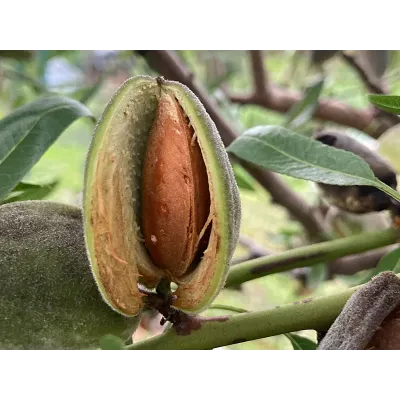
Wenn Sie in eine knackige Mandel beißen, essen Sie nicht einfach nur einen gewöhnlichen Snack. Sie nehmen eine der komplexesten und konzentriertesten Formen der Ernährung auf, die die Natur je hervorgebracht hat. Obwohl Mandeln (Prunus amygdalus) oft nur als energiereiches Lebensmittel wahrgenommen werden, liegt ihr wahrer Wert nicht in der Kalorienmenge, sondern in ihrer außergewöhnlichen Qualität. Sie sind ein Meisterwerk der Biochemie, in dem sich gesunde Fette, hochwertiges pflanzliches Eiweiß und komplexe Kohlenhydrate mit niedrigem glykämischen Index vereinen. Tauchen wir gemeinsam in die mikroskopische Welt des Mandelkerns ein und enthüllen wir das detaillierte Profil seiner Makronährstoffe, dank derer sich die Mandel zu Recht den Titel „Königin der gesunden Fette“ verdient hat.
Gesamtes Nährstoffprofil: Energie für unterwegs
Mandeln gelten als nährstoffdichtes Lebensmittel. Eine typische Mandel enthält im Durchschnitt 575 bis 598 kcal pro 100 Gramm. Diese Energie ist jedoch in einer sehr stabilen Form gespeichert, unterstützt durch einen natürlich niedrigen Wassergehalt, der in reifen Kernen nur bei 3 bis 6 % liegt.
|
~50 %
Fette
|
~21 %
Eiweiß
|
~20 %
Kohlenhydrate (inkl. Ballaststoffe)
|
3–6 %
Wassergehalt
|
← Tabelle seitlich wischen →
Dieses Verhältnis kann je nach Genotyp (Sorte), klimatischen Bedingungen, Bewässerung und Erntejahr leicht variieren.
Fette und das Fettsäureprofil: Warum Mandeln der König der gesunden Fette sind
Fette bilden den größten und wichtigsten Bestandteil des Mandelkerns. Der Gesamtlipidgehalt bewegt sich je nach Sorte in einem weiten Bereich von 44 % bis 61 %. Diese Lipide liegen in der Zelle nicht frei verteilt vor, sondern sind sicher in intrazellulären Fetttröpfchen (Oleosomen) mit einem Durchmesser von 1 bis 3 Mikrometern gespeichert, die von einer schützenden Schicht aus Phospholipiden und spezifischen Proteinen namens Oleosine umhüllt sind.
Was Mandeln zu einem wahren „König“ macht, ist nicht die Menge des Fettes, sondern dessen Zusammensetzung. Aus medizinischer Sicht ist das Fettsäureprofil der Mandeln außerordentlich günstig:
Die Vorherrschaft von Öl- und Linolsäure
Zwei Fettsäuren dominieren das Mandelöl absolut und machen zusammen etwa 90 % des gesamten Fettes im Kern aus:
Das O/L-Verhältnis (Öl-/Linolsäure) als Qualitätsindikator
Wissenschaftliche Studien zeigen, dass der Gesamtgehalt dieser beiden Säuren zwar stabil ist, ihr gegenseitiges Verhältnis (O/L) jedoch zwischen den einzelnen Sorten stark schwankt. Dieses Verhältnis ist ein entscheidender Qualitätsindikator. Linolsäure (PUFA) ist nämlich weitaus anfälliger für Oxidation (Ranzigwerden) als Ölsäure (MUFA). Daher weisen Mandeln mit einem hohen O/L-Verhältnis (also mit deutlichem Übergewicht der Ölsäure) eine viel höhere Oxidationsstabilität auf, haben eine längere Haltbarkeit und sind widerstandsfähiger gegen Qualitätsverlust während der Lagerung.
Eiweiß: Amandin und die Bausteine des Lebens
Mandeln sind eine hervorragende pflanzliche Eiweißquelle. Der Gesamteiweißgehalt bewegt sich zwischen 14 und 26 g pro 100 g Mandeln (im Durchschnitt etwa 21,2 g). Eine Besonderheit aus Sicht der Lebensmittelchemie ist, dass zur Berechnung des Eiweißgehalts aus dem Gesamtstickstoff bei Mandeln nicht der übliche Umrechnungsfaktor 6,25 verwendet wird, sondern der spezifische Faktor 5,18, was eine Überschätzung ihres tatsächlichen Gehalts verhindert.
Amandin: das wichtigste Speicherprotein
Bis zu 88 – 91 % des Eiweißes in Mandeln bestehen aus Globulinen und Albuminen. Der absolute Herrscher des Eiweißprofils ist ein Globulin namens Amandin (oder Mandel-Hauptprotein – AMP). Amandin gehört zur Klasse der 11S-Legumine und macht etwa 65 % bis 70 % des gesamten löslichen Eiweißes im Kern aus. Es handelt sich um ein großes Molekül (Hexamer) mit einem Molekulargewicht von etwa 450 kDa, das durch Disulfidbrücken zusammengehalten wird. Es ist wichtig zu erwähnen, dass gerade das Amandin (insbesondere sein glutaminreicher Bereich) das Hauptallergen ist, das bei empfindlichen Personen für Lebensmittelallergien verantwortlich ist.
Aminosäureprofil
Hinsichtlich der Aminosäurezusammensetzung sind Mandeln eine außergewöhnlich reiche Quelle für Arginin (bis zu 2,46 g pro 100 g), Glutaminsäure und Asparaginsäure. Der hohe Argininanteil ist ein großer gesundheitlicher Vorteil, denn Arginin ist im Körper eine Vorstufe von Stickstoffmonoxid (NO) – einem starken Vasodilatator, der die Blutgefäße erweitert, den Blutdruck senkt und die Verklumpung der Blutplättchen verhindert. Die limitierenden (im Mangel vorliegenden) essenziellen Aminosäuren in Mandeln sind hingegen Methionin, Cystein, Lysin und Threonin.
Kohlenhydrate und Ballaststoffe: Energie ohne glykämische Schwankungen
Obwohl Mandeln etwa 19 bis 22 % Kohlenhydrate enthalten, ist ihre Zusammensetzung aus Sicht der modernen Diätetik ideal. Mandeln sind ein Lebensmittel mit sehr niedrigem glykämischen Index.
Zucker und Stärke
Mandeln dürfen sich mit der Aussage „von Natur aus zuckerarm“ schmücken. Der Gesamtgehalt an löslichen Zuckern beträgt nur 3,9 bis 5,5 g pro 100 g. Der absolut vorherrschende Zucker ist die Saccharose. Weitere Zucker wie Glucose, Fructose, Raffinose oder Zuckeralkohole (Sorbit, Inosit) kommen in reifen Kernen nur in Spuren vor. Stärke, die in anderen Kulturpflanzen üblich ist, ist in Mandeln nahezu nicht vorhanden (weniger als 1 g pro 100 g).
Ballaststoffe: die Architektur der Zellwände
Was den größten Teil der Kohlenhydrate in Mandeln ausmacht, sind die Ballaststoffe. Die gesamten Ballaststoffe machen 11 bis 14 % aus (im Durchschnitt 12,2 g pro 100 g). Die Ballaststoffe in Mandeln sind überwiegend unlöslich und bilden die eigentliche Architektur der Zellwände (Zellulose, Hemizellulose, Lignin und Pektinstoffe).
Diese Ballaststoffe haben eine doppelte Wirkung:
Fazit
Das Nährstoffprofil der gewöhnlichen Mandel ist keine zufällige Ansammlung chemischer Substanzen. Es ist eine von der Evolution fein abgestimmte Sinfonie, in der jeder Bestandteil seine wichtige Rolle spielt. Die Vorherrschaft der Ölsäure schützt unser Herz, der hohe Argininanteil entspannt unsere Blutgefäße, und die feste Struktur der Ballaststoffe sorgt dafür, dass diese gewaltige Energiemenge langsam, gleichmäßig und ohne unerwünschte Blutzuckerschwankungen an den Körper abgegeben wird. Die Mandel ist somit ein leuchtender Beweis dafür, dass es in der modernen Ernährung nicht nur darauf ankommt, wie viele Kalorien ein Lebensmittel enthält, sondern vor allem darauf, in welcher biochemischen und physischen Form diese Kalorien „verpackt“ sind. Zu Recht gebührt ihr daher ein Platz an der Spitze der Pyramide der gesunden Lebensmittel.
|
Ziehen Sie Ihren eigenen Mandelbaum
Entdecken Sie in unserem Shop frostharte Mandelsorten, die auch für kühlere Lagen geeignet sind. Wählen Sie selbstfruchtbare Sorten mit hohem Ölsäuregehalt und ziehen Sie Ihren eigenen Vorrat an gesunden Fetten direkt aus dem Garten. Mandelsorten ansehen |
Treten Sie unserer Gemeinschaft bei
Tauschen Sie Anbauerfahrungen aus, fragen Sie nach Sorten und teilen Sie Ihre Ernte auf unserer Facebook-Seite voller begeisterter Obstgärtner, diskutieren Sie mit Fachleuten und erhalten Sie als Erste Zugang zu neuen Artikeln. Zur Seite |