






































Haselnuss-Sorten – Ennis, Tonda Gentile, Hallesche Riesennuss
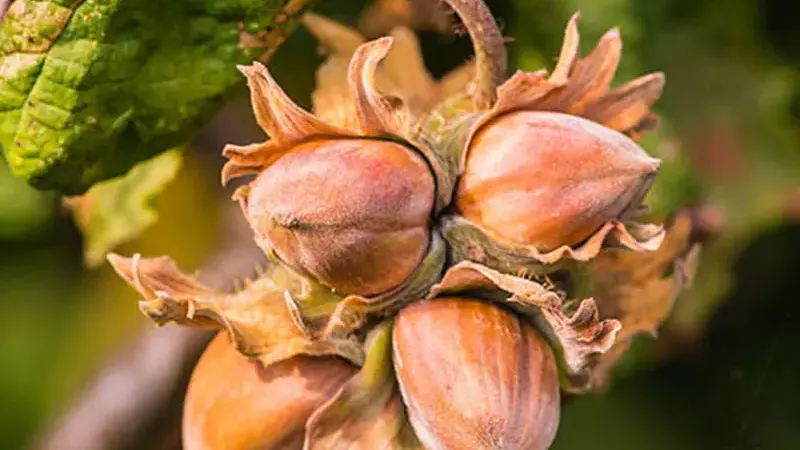
Haselnüsse: Vier Sorten, die sich lohnen
Von der riesigen 'Ennis' bis zur legendären Piemonteser 'Tonda Gentile' – ein Ratgeber für Hausgärtner und Obstbauern
Die Haselnuss gehört zu den dankbarsten Nussfrüchten für unser Klima. Sie ist anspruchslos, langlebig und belohnt den Anbauer bei richtiger Sorten- und Bestäuberwahl mit einer regelmäßigen, reichen Ernte. In diesem Artikel stellen wir vier bewährte Sorten vor, von denen jede ihre Stärken hat – von rekordverdächtiger Fruchtgröße über kulinarische Spitzenqualität bis hin zu außergewöhnlicher Frosthärte und zuverlässiger Bestäubung.
|
4–5 g
Gewicht der größten Nüsse
|
42–46 %
Kernausbeute
|
-30 °C
Frosthärte der robustesten Sorte
|
VIII–X
Reifezeit (Monate)
|
'Ennis' – der Riese unter den Haselnüssen
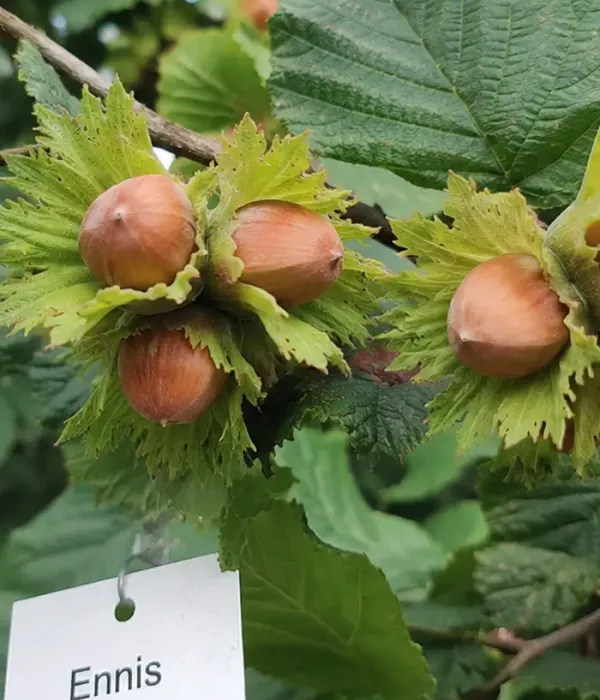
Die Sorte 'Ennis' ist der Stolz der amerikanischen Züchtung und ein weltweiter kommerzieller Erfolg. Berühmt wurde sie durch ihre übergroßen, ästhetisch perfekten Nüsse, die meist 30 bis 50 % größer sind als gewöhnliche Haselnüsse. Wer eine ertragreiche Hasel mit riesigen Nüssen sucht, ideal für den Verkauf in der Schale oder als Tischschmuck, trifft mit 'Ennis' die klare Wahl.
Die Sorte wurde 1947 als Zufallssämling in der Stadt Ennis im US-Bundesstaat Montana entdeckt. Die entscheidende Prüfung erfolgte an der Oregon State University, und 1978 kam sie offiziell auf den kommerziellen Markt. Dank ihrer Rekordmaße verdrängte sie rasch viele ältere Haseltypen.
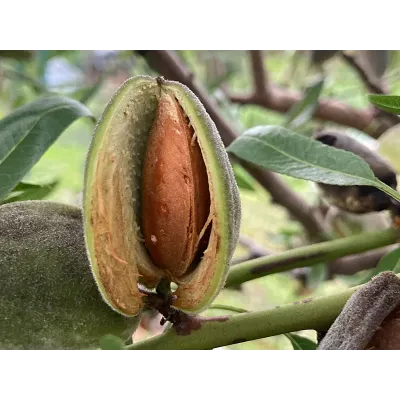
Eine einzelne Nuss wiegt 4 bis 4,8 g und hat eine hellbraune Schale mit ausgeprägter dunklerer Streifung – sie ist eine der schönsten Sorten für den Verkauf in der Schale.
Der Kern ist groß, weiß und fest, mit einer Ausbeute von 44 bis 46 %. Nach dem Rösten lässt sich die Haut leicht entfernen (sie blanchiert gut). Der Geschmack ist angenehm süß, fein und cremig. Die Sorte reift in der zweiten Septemberhälfte und kommt recht bald nach der Pflanzung in den Ertrag. Holz und Kätzchen vertragen Fröste bis -24 °C bis -26 °C.
|
Vorteile
Riesige Nüsse · schöne gestreifte Schale · dünne Schale und leichtes Knacken · sehr hoher und regelmäßiger Ertrag · süßer, cremiger Geschmack · spätere Blüte schützt vor Spätfrösten.
|
Nachteile
Selbststeril – benötigt einen Bestäuber wie 'Butler' · überhängender Wuchs unter der Last der Ernte · höherer Lichtbedarf zum Füllen der großen Kerne.
|
'Tonda Gentile delle Langhe' – der beste Geschmack der Welt
Diese Legende aus dem italienischen Piemont gilt als beste Haselnuss der Welt und ist der Goldstandard für Konditoren und Schokoladenhersteller. Ihre Besonderheit liegt im perfekten Gleichgewicht von Ölen und Aromastoffen. Nach dem Rösten entfaltet sich ein intensives, süß-nussiges Aroma, das keine andere Sorte nachahmen kann.
Der Ruhm der Sorte begann im 19. Jahrhundert in den Hügeln um die Stadt Alba. Ein Kakaomangel während der napoleonischen Kriege brachte die örtlichen Konditoren dazu, Schokolade mit dieser aromatischen Hasel zu mischen – so entstand die legendäre Gianduja-Paste. Heute ist die Sorte durch das europäische Qualitätssiegel g.g.A. (I.G.P. Nocciola Piemonte) geschützt.
Die Nüsse sind mittelgroß (2,5 bis 3 g) mit einer charakteristischen, leicht dreilappigen runden Form. Der Kern ist vollkommen rund, gut kalibriert und kompakt, mit einer Ausbeute von 42 bis 45 %. Nach dem Rösten löst sich die Haut zu fast 100 %. Der Geschmack ist fein und butterig, mit langem süßem Nachklang ohne jede Spur von Bitterkeit. Die Sorte reift bereits in der zweiten Augusthälfte.
Eine frühe Ernte ist entscheidend für die Erhaltung der höchsten Qualität und des Profils der aromatischen Öle. Dank des hohen Ölsäuregehalts werden die Kerne auch bei längerer Lagerung nicht ranzig.
Das Holz widersteht Frösten bis -22 °C bis -24 °C, doch unter mitteleuropäischen Bedingungen gedeiht die Sorte am besten in wärmeren Weinbaugebieten und an geschützten Südlagen. Geeignete Bestäuber sind 'Tonda di Giffoni', 'Cosford' oder 'Tonda Francescana'. Die Krone ist breit ausladend und benötigt beim Schnitt etwas mehr Aufmerksamkeit, damit sie ausreichend aufgelichtet wird.
'Halle’sche Riesennuss' – der zuverlässige Klassiker und Universalbestäuber
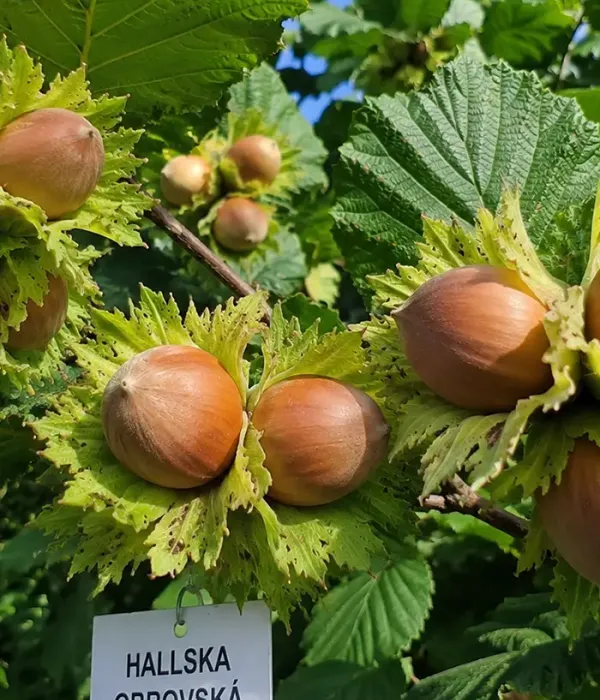
Dieser langjährig bewährte deutsche Klassiker gehört zu den robustesten und zuverlässigsten Sorten in unseren Gärten. Geschätzt wird er für seine großen Nüsse mit ausgezeichnetem süßem Geschmack und für seine außergewöhnliche Wuchskraft. Dank des dichten Wuchses eignet er sich ideal für essbare Hecken und Windschutzpflanzungen. Zugleich ist er ein weltweit anerkannter Universal-Pollenspender, der bei nahezu jeder anderen Hasel im Garten für eine reiche Ernte sorgt.
Die Sorte wurde bereits 1788 von Amtmann Büttner in der deutschen Stadt Halle gezüchtet. Sie entstand aus einer Artkreuzung von Lambertshasel und gemeiner Hasel (Corylus maxima × Corylus avellana). Sie bildet einen kräftigen, aufrechten und breiten Strauch von 4 bis 6 Metern Höhe und zeichnet sich durch Langlebigkeit aus.
Sie blüht von Februar bis März. Die männlichen Blüten (Kätzchen) sind außerordentlich frosthart und produzieren eine große Menge hochwertigen Pollens. Die Nüsse sind groß (4 bis 5 g), breit kegelförmig und wachsen in Büscheln von 2 bis 4 Stück. Die Kernausbeute beträgt etwa 42 bis 45 %.
Wenn in Ihrer Umgebung (bis 100 m) wilde Haseln wachsen, sorgen diese auch ohne Pflanzung einer weiteren Kultursorte für die Bestäubung. Ausgezeichnete Bestäuber für den eigenen Höchstertrag sind 'Cosford' oder 'Lambertsnuss'.
'Tonda Gentile Romana' – produktiv und widerstandsfähig
Diese hochwertige und außerordentlich produktive italienische Sorte ist die am weitesten verbreitete Hasel in der Region Latium um Rom. Sie zeichnet sich durch stabile Erträge, ausgezeichnete Krankheitsresistenz und hochwertige, mittelgroße Nüsse mit ausgeprägtem Geschmack aus. Neben ihrer hervorragenden Ertragsleistung dient sie auch als erstklassiger Bestäuber für andere italienische Premiumsorten.
Der Strauch wächst mittelstark und halbaufrecht, mit einer lockereren, verzweigten Krone, die den Früchten reichlich Licht bietet. Die Sorte ist protogyn (die weiblichen Blüten reifen vor den männlichen Kätzchen). Obwohl einige Quellen eine teilweise Selbstfruchtbarkeit angeben, wird für einen hohen, stabilen Ertrag die Pflanzung mit Bestäubern dringend empfohlen – geeignete Partner sind 'Halle’sche Riesennuss' oder 'Cosford'.
Die Nüsse sind mittelgroß bis groß, rund bis leicht oval und wachsen in Büscheln von 2 bis 3 Stück. Die Schale ist dünn, aber fest, kastanienbraun mit mäßiger Streifung. Die Kernausbeute ist hoch und erreicht etwa 45 %, was zu einer hohen Wirtschaftlichkeit beiträgt. Die Blanchierfähigkeit wird als eher schwächer bewertet.
So lesen Sie die Eignung der Sorte:
Ausgezeichnete Resistenz gegen Krankheiten und Krankheitserreger
Schwächere Blanchierung – die Haut lässt sich nach dem Rösten schwerer entfernen
Empfindlich gegenüber schweren, staunässen Böden
Die Sorten auf einen Blick
| Sorte | Nussgewicht | Reife | Frosthärte | Hauptstärke |
|---|---|---|---|---|
| Ennis | 4–4,8 g | Ende September | -24 bis -26 °C | Größte Nüsse |
| Tonda Gentile delle Langhe | 2,5–3 g | Ende August | -22 bis -24 °C | Bester Geschmack und Aroma |
| Halle’sche Riesennuss | 4–5 g | Sept. – Anf. Okt. | -28 bis -30 °C | Universalbestäuber, Härte |
| Tonda Gentile Romana | mittel bis groß | September | gut | Hoher, stabiler Ertrag |
← Tabelle seitlich wischen →
Berücksichtigen Sie bei der Sortenwahl Ihr Ziel: 'Ennis' für Größe und Verkauf in der Schale, 'Tonda Gentile delle Langhe' für kulinarische Spitzenqualität, 'Halle’sche Riesennuss' für Frosthärte und zuverlässige Bestäubung und 'Tonda Gentile Romana' für stabile Produktion. Vergessen Sie in jedem Fall nicht einen geeigneten Bestäuber – er entscheidet darüber, ob die Ernte reich oder gar nicht ausfällt.
Wählen Sie Ihre Haselpflanzen in unserem ShopVon der riesigen 'Ennis' bis zur aromatischen 'Tonda Gentile' – wir führen bewährte Sorten samt ihren zuverlässigen Bestäubern. Ziehen Sie Ihre eigene Ernte vollmundiger Nüsse. Zum Shop → |
Folgen Sie uns auf FacebookTauschen Sie Anbauerfahrungen aus, fragen Sie nach Sorten und teilen Sie Ihre Ernte in einer Gemeinschaft voller begeisterter Obstbauern, diskutieren Sie mit Fachleuten und erhalten Sie als Erste Zugang zu neuen Artikeln. Zu unserer Seite → |
Verwandte Produkte