





































The Apricots That Beat the Frost: How Latvia's icy climate bred the most antioxidant-rich apricots on the continent

The Latvian Apricot Aristocracy
How the harsh climate of Northern Europe bred hardy apricot varieties with an exceptional antioxidant content
Apricots usually bring to mind sun-drenched Mediterranean orchards, hot summers and dry air. But what happens when breeders decide to grow this fruit in the cold, damp conditions of Northern Europe? The scientific work of the team around Edite Kaufmane and Gunārs Lācis at the Institute of Horticulture (LatHort) in Dobele, Latvia, is more than a list of data – it is the story of an entire family of apricot varieties that proves the north can grow fruit fit for a royal table.
At its head stands a royal trio: a reliable, a gourmet, and a generous variety. They are joined by two specialists with unique qualities, while a new generation of breeding material waits in the wings. Two varieties in particular deserve special attention – laboratory analysis revealed them as true champions in valuable plant compounds: the large-fruited 'Velta' and the health phenomenon 'Dimaija'. Let's take a closer look at the whole family, and at exactly what the chromatography showed.
The Royal Trio: top choices for every grower
Three varieties represent the pinnacle of Latvian breeding. Officially registered back in 1999, they remain the gold standard for winter hardiness and quality to this day.
Specialists with unique qualities
These varieties may not belong to the mainstream, but they offer distinctive qualities that make them irreplaceable in certain respects.
The future of breeding: hidden treasures not yet on the market
The following varieties and hybrids are evidence of continuing progress. Although not yet commercially available, they represent a genetic treasure for future generations of apricots.
'Jausma' and 'Rasa' (registered in 2004) are promising heirs to the throne. 'Jausma' impresses with large fruit (37.2 g) and an extremely high sugar content (23.4%), though its stone is firmly attached to the flesh, which suits it more to fresh eating. 'Rasa' stands out for its firm flesh, good stone separation, and later flowering.
'Vita' and 'Veldze' flower very early, yet still manage to produce a crop. Their fruit is very sweet (22.6% and 23.8% sugar), but early flowering carries a high risk of spring frost – they are suited only to the warmest, most sheltered sites.
A separate chapter belongs to hybrids such as PU-16749, PU-20955 and PU-15029 – the genetic treasury of the Latvian programme, intended for breeders rather than home gardeners. PU-16749 is a survival champion: thanks to an extremely long dormancy it bears fruit every year, even though the fruit is small and less tasty, making it an invaluable source of hardiness genes. PU-20955 and PU-15029 were selected for their outstanding resistance of flower buds to temperature fluctuations – building blocks for the apricots of the future.
'Velta' – the orange triumph of Nordic fruit growing
Why 'Velta' is queen among cold-loving apricots
Apricot growing has historically been associated with sun-drenched Mediterranean slopes, hot summers and mild winters. The idea that this heat-loving fruit could be grown successfully, in premium quality, in the harsh conditions of the Baltics – where temperatures commonly drop to −20 °C – long sounded like a utopia. Latvian breeders took up the challenge, and after decades of painstaking work presented the world with a pomological gem: the 'Velta' variety.
The variety's story began at the Institute of Horticulture (LatHort) in Dobele. It is built on breeding material collected in the 1940s and 1950s by P. Upītis, a pioneer of Latvian fruit growing, who drew on wild populations from the Caucasus and the mountains of Central Asia in his search for frost-hardy genes. After years of rigorous selection led by E. Kaufmane, 'Velta' was officially registered as a recognised variety in Latvia in 1999. Since its release it has been known for later flowering and regular fruitfulness – key prerequisites for success in cold regions.
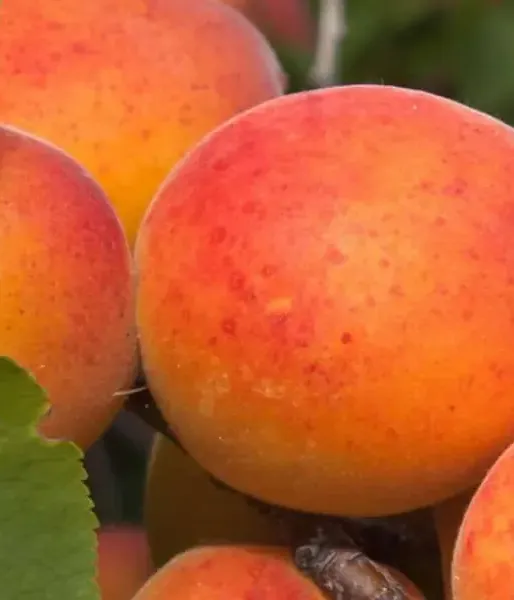
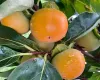
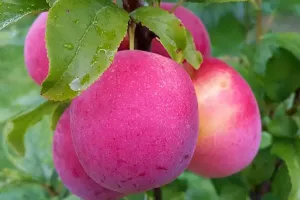
One of the biggest problems with frost-hardy varieties is small fruit size, often only around 20 grams. 'Velta' breaks that mould. Within P. Upītis's original material it had by far the largest fruit, reaching weights of up to 50 grams; long-term measurements confirmed an average fruit weight of 39.8 ± 1.8 g. The fruit is large, round, slightly flattened, with a gentle point at the tip and a deep ventral suture. The base orange colour is complemented by a distinct red blush, giving the variety an attractive market appearance. The flesh is deep orange, medium-firm and fine-grained.
The skin is medium-thick and slightly uneven, giving it good resistance to handling and transport. Its second advantage is a freestone – large, elongated, with an average weight of 2.3 g, that separates cleanly from the flesh. It is a trait you will appreciate in every single fruit, whether eaten fresh or processed.
'Dimaija' – a Nordic gem packed with health
Why this variety shows the highest measured antioxidant values among the Latvian apricots tested
While common commercial varieties are chiefly bred to be sweet, 'Dimaija' brings a different arsenal: good disease resistance and the highest measured antioxidant and vitamin C values among the tested Latvian varieties. Its pedigree traces back to a second generation of breeding material established by P. Upītis. After years of selection and testing under local conditions, 'Dimaija' was submitted for variety registration in Latvia in 2023.
The tree flowers moderately early – in Latvian conditions from late April to mid-May – and forms a fairly narrow, upright crown. A key strength is the formation of very healthy wood. Its biggest agronomic advantage is its health status: 'Dimaija' shows good resistance to the two biggest enemies of apricots – apricot leaf spot (Wilsonomyces carpophilus) and brown rot (Monilinia spp.). It has good winter frost hardiness, and its blossoms are relatively resistant to common spring frosts, giving it regular yields. Its limit lies in a sharper temperature drop during the later stages of flower bud development – around −6 °C already reduces the crop.
The fruit is large, evenly shaped and round. The skin is smooth, thin, with a faintly matte surface; the base colour is light orange, complemented by a medium-sized, distinct red blush. The flesh is a deep yellow, medium-firm, fine-grained, with pronounced aroma and good flavour. A major advantage is its freestone – medium-sized and easily, cleanly separated from the flesh. The fruit ripens fairly evenly around the turn of July into the first or second week of August.
What the lab revealed
|
2795.3 mg
highest total phenol content per 100 g dry matter
'Dimaija' |
148.3 mg
highest vitamin C content per 100 g dry matter
'Dimaija' |
1129.1 µg
highest chlorogenic acid content per g dry matter
'Velta' |
← Swipe the table sideways →
In a broad analysis of Latvian varieties, 'Dimaija' achieved the highest total phenol and flavonoid content of all the samples tested. Chromatographic analysis of individual compounds told the same story: the highest levels of rutin, neochlorogenic acid and catechin. The same held true for vitamin C, where 'Dimaija' clearly outperformed commercial market varieties – and as a result its extracts also showed the highest overall antioxidant activity in the DPPH and FRAP assays.
'Velta', meanwhile, stands out for its exceptionally high chlorogenic acid content – one of the most powerful natural antioxidants, whose effect on glucose metabolism and inflammatory processes is studied in several trials. Its carotenoid content is also high, the compounds responsible for the fruit's deep orange colour and for the body's production of vitamin A.
| Indicator | 'Dimaija' | 'Velta' | 'Gundega' | 'Boriss' | Market |
|---|---|---|---|---|---|
| Total phenols (mg GAE/100 g) | 2795.3 | 1566.3 | 1843.2 | 216.4 | 582.0 |
| Flavonoids (mg CE/100 g) | 2270.5 | 1197.4 | 1536.0 | 122.2 | 138.8 |
| Vitamin C (mg/100 g) | 148.3 | 120.4 | 126.4 | 75.3 | 85.5 |
| Carotenoids (mg/100 g) | 16.8 | 24.4 | 13.0 | 28.7 | 30.4 |
| Rutin (µg/g) | 1249.4 | 771.4 | 300.5 | 89.5 | 140.0 |
| Chlorogenic acid (µg/g) | 384.8 | 1129.1 | 159.8 | 21.3 | 41.9 |
| Neochlorogenic acid (µg/g) | 550.2 | 463.9 | 84.9 | 1.0 | 2.1 |
| Catechin (µg/g) | 373.3 | 10.0 | 94.6 | 3.5 | 6.0 |
← Swipe the table sideways →
Source: Juhnevica-Radenkova et al., 2024 (Table 4 and 5). "Market" = common Greek market apricots used in the study for comparison. Each figure is the average of four measurements, calculated on dry matter.
Comparison: vitamin C content
The differences between varieties are striking visually too – in the comparison below, each value is shown against a range of 0–150 mg/100 g dry matter, the span of values measured in this study.
| 'Dimaija' | 148.3 mg/100 g |
| 'Gundega' | 126.4 mg/100 g |
| 'Velta' | 120.4 mg/100 g |
| Market (common apricots) | 85.5 mg/100 g |
| 'Boriss' | 75.3 mg/100 g |
← Swipe sideways →
The price of health: antioxidants at the expense of sweetness
| Indicator | 'Dimaija' | 'Velta' | 'Gundega' | 'Boriss' | Market |
|---|---|---|---|---|---|
| Sugars (°Brix) | 11.3 | 11.5 | 13.6 | 14.8 | 11.8 |
| Titratable acidity (%) | 24.0 | 35.9 | 20.0 | 14.5 | 13.8 |
| Ripeness index | 4.7 | 3.2 | 6.8 | 10.2 | 8.5 |
← Swipe the table sideways →
Source: Juhnevica-Radenkova et al., 2024 (Table 2). The ripeness index is the ratio of sugars to acidity – the higher it is, the riper the fruit was at harvest.
The phytochemicals measured in the table – especially phenolic acids and catechin – are inherently bitter and astringent. When researchers turned 'Dimaija' and 'Velta' into candied fruit, a sensory panel scored them lower than the sweet 'Boriss': tasters described 'Dimaija' as having a somewhat bitter, spicy, astringent aftertaste and lacking pronounced sweetness (6.5 points out of 12). 'Velta', by contrast, achieved the highest soluble solids content of all the tested samples – 78.6 °Brix – and its candied version was described as having a strong, distinctly sour taste with a spicy aftertaste, reminiscent of a good-quality marmalade.
Who these varieties are for
Thanks to its balance of sugar and acidity, 'Velta' is an ideal raw material for homemade jams, marmalades and dried products, where a pronounced fruit flavour is needed that won't disappear under the added sugar. 'Dimaija', in turn, is proof that breeding doesn't have to follow only the path of higher sugar content and flawless supermarket looks – it offers a healthy, hardy tree with regular yields, large freestone fruit, and a composition you won't find in standard offerings.
If sweetness above all is what you expect from an apricot, reach for 'Boriss' or a similar variety. But if you're curious about what's really inside the fruit – and want to put some away for winter, too – 'Dimaija' and 'Velta' are among the most interesting choices to come out of Northern Europe.
|
Discover hardy apricot varieties
Looking for an apricot that can handle the colder corners of your garden? Our range of stone fruit includes varieties selected for hardiness, flavour, and valuable plant compounds.
Browse varieties |
Join our community
Share your growing experience, ask about varieties, and celebrate your harvest in our Facebook community full of passionate fruit growers, chat with experts, and get first access to new articles.
Join us |
Related Products