





































Apricots: Everything in One Place – A New Book on Growing and Processing Apricots

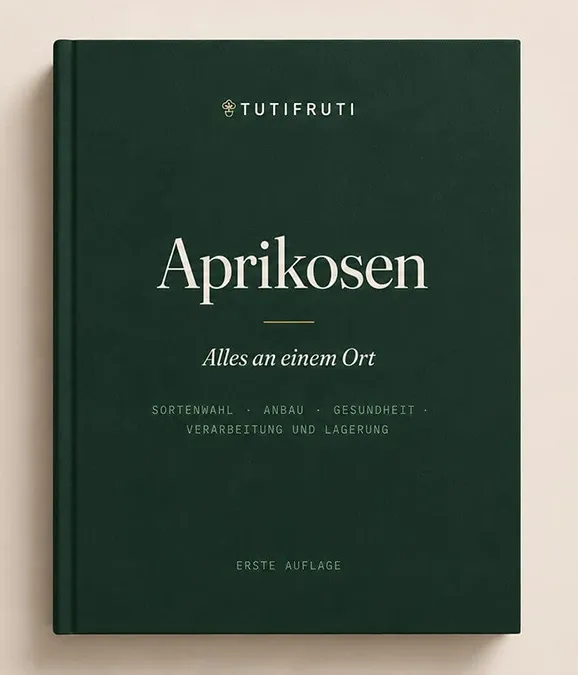
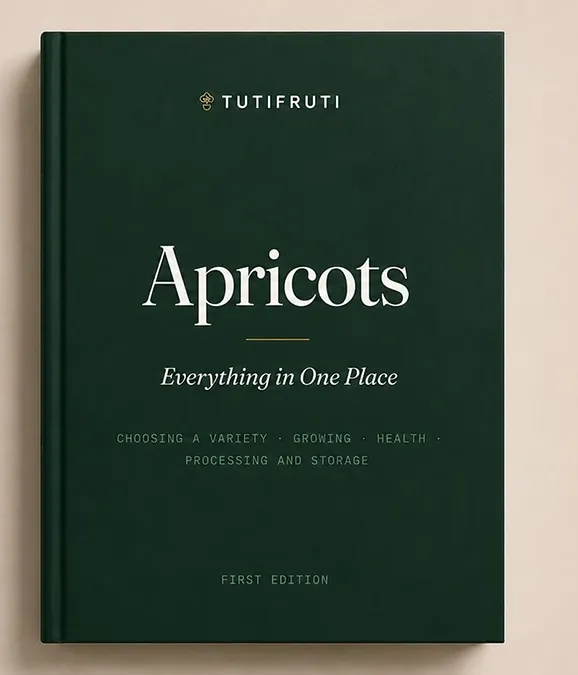
Apricots: Everything in One Place
A new book that brings science, breeders' stories, and real garden practice together in 294 pages
The apricot is one of the most rewarding, yet most demanding fruit trees you can have in a garden. It blossoms early, which puts it at the mercy of spring frosts. It's sensitive to disease and to exactly where you plant it. But when it does well, it rewards you with a harvest you simply can't buy in a store — because a tree-ripened apricot and a supermarket apricot are two entirely different things.
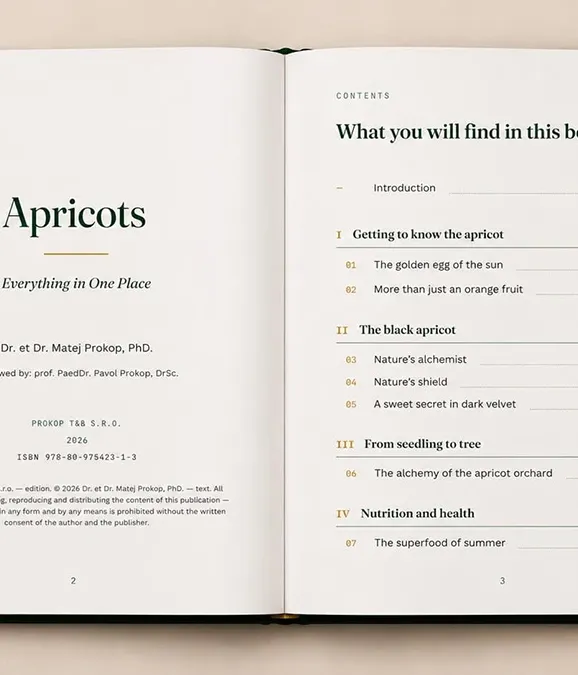
That's exactly what the new book Apricots: Everything in One Place is about — and much more. It has just landed in our shop. This isn't another generic guide to fruit trees. The author, Dr. et Dr. Matej Prokop, PhD., built it on dozens of scientific studies, and its scientific accuracy was reviewed by prof. PaedDr. Pavol Prokop, DrSc. The result is a comprehensive guide that follows the apricot's entire journey — from choosing the right variety to the last jar of compote you open in winter.
|
294
pages
|
22
chapters
|
45
varieties in the catalog
|
← Swipe the table sideways →
Nine parts, one journey
The book is organized into nine parts and twenty-two chapters that build on each other naturally. Rather than offering only recipes or only dry botany, it weaves the two together — in a way you won't have seen on the market before.
A catalog that speaks in numbers
The variety catalog in the appendix isn't just a list of names. For many of the 45 varieties, you'll find real data on fruit composition — often drawn directly from the scientific studies the book cites. As a sample, here's a comparison of antioxidant content in a few cold-climate varieties against a typical store-bought apricot.
| 'Dimaija' | 2,795.3 mg/100 g |
| 'Gundega' | 1,843.2 mg/100 g |
| 'Velta' | 1,566.3 mg/100 g |
| Typical store-bought apricot | 582.0 mg/100 g |
← Swipe sideways →
Total phenolic content in dry matter, scale 0–3,000 mg GAE/100 g. Source: study cited in the book (Juhnevica-Radenkova et al., 2024).
The book goes into similar depth on sugar content, acidity, cold hardiness, and pollination requirements — for every variety in the catalog.
- Apricot tree owners who want to truly understand their tree
- Anyone still choosing their first sapling
- Gardeners with a generous harvest looking for a proven way to process it
- Anyone curious about what's actually going on inside the fruit
Apricots: Everything in One Place is not a glossy cookbook or a simplified pamphlet. Every claim in it is grounded in cited scientific literature, and its content was peer-reviewed. If you're after a quick guide full of recipe photos, this isn't the book. If you want to understand why your apricot tree does what it does, you're in the right place.
The book was published as an electronic publication (PDF), first edition, ISBN 978-80-975423-0-6, and is available in our shop.
|
Apricots: Everything in One Place
Add this book to your library and get to know the apricot down to the last detail — from genetics to the jar of compote on your shelf. Go to the shop |
Join us
Swap growing tips, ask about varieties, and share your harvest with fellow fruit growers on our Facebook page. Chat with experts and get first access to new articles. Follow our page |
The download link will be available once your order has been paid for.
Related Products