














































Goji (Chinese wolfberry): What is it? A guide to botany and species (Part 1)
Goji Berry: A Superfruit Odyssey from A to Z (Part 1 – Botany and Species)
In the world of "superfoods," few fruits have captured the attention of consumers and scientists as intensely as the goji berry. These small, brightly colored berries, praised for their exceptional nutritional properties, have been an integral part of Traditional Chinese Medicine for centuries, where they symbolize vitality and longevity. Their journey to global awareness, however, is a phenomenon of recent decades.
“But did you know that 'goji' is not a single plant, but a name for the berries from the botanically diverse and geographically widespread genus *Lycium*? And that there is a fundamental difference between red and black goji berries?”
In the first part of our comprehensive guide, we will dive into the botanical essence and geographical odyssey of the genus *Lycium*. We will reveal what defines these plants, where they come from, and introduce the key species that are the foundation of their enormous potential.
1. The Genus *Lycium* – More Than Just Berries
The genus *Lycium* belongs to the nightshade family (Solanaceae), which also includes common crops like potatoes, tomatoes, and peppers. It comprises nearly 100 species that have adapted to life in harsh conditions around the world.
- Appearance: They are deciduous, woody shrubs, often with thorns, reaching a height of 1 to 3 meters.
- Leaves: Simple, small, and lance-shaped.
- Flowers: Funnel-shaped, with colors ranging from white and pink to purple.
- Fruit: A fleshy berry, which is the most prized part of the plant.
2. From America to the World: Origin and Incredible Resilience
Although the most commercially known goji species originate from Asia, scientists believe the genus itself comes from the Americas, from where it spread to other continents. What is most important for growers, however, is its incredible adaptability.
- Extreme Resilience: Plants of the genus *Lycium* are masters of survival. They grow in arid and semi-arid environments like deserts and steppes.
- Salt Tolerance: Many species are halophytic, meaning they can grow in saline soils where other plants would not survive. This makes them ideal for challenging locations.
Today, the world's largest producer of goji berries is Asia (especially the Ningxia region of China), but cultivation is also successfully expanding in Europe, with Romania having the largest growing area.
3. Not All Goji Berries Are Created Equal: Key Species You Need to Know
Under the common name "goji," there are primarily three key species that differ fundamentally not only in appearance but also in their chemical composition.
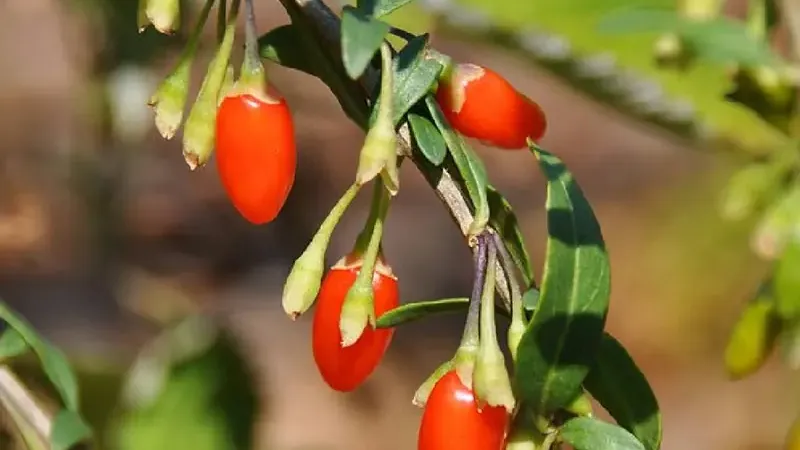
Red Goji: Lycium barbarum and Lycium chinense
These are the two most famous and commercially widespread species. In practice, they are often used interchangeably as they are very similar.
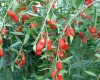
- Color and Key Compounds: Their bright orange-red color is caused by an extremely high content of carotenoids, especially zeaxanthin. Goji is considered one of the richest natural sources of this compound in the world, which is crucial for eye health.
- Other Components: They contain unique polysaccharides (LBP), which are responsible for their famous immune-modulating effects, and the flavonoid rutin.
Profile: Red Goji (L. barbarum / L. chinense)
- Appearance: Elongated, orange-red berries.
- Dominant Compounds: Carotenoids (Zeaxanthin), Polysaccharides (LBP).
- Main Benefits (Traditional): Immune support, eye protection, vitality.
Black Goji: Lycium ruthenicum
This species is a true rarity and a phytochemical treasure, differing fundamentally from the red goji.
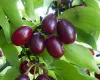
- Color and Key Compounds: Its dark purple to black color is caused by an extremely high content of anthocyanins—the same powerful antioxidants found in aronia or blueberries. Unlike red goji, however, it contains only a negligible amount of carotenoids.
- Antioxidant Power: Thanks to anthocyanins, black goji has a significantly higher total antioxidant capacity than red goji.
Profile: Black Goji (L. ruthenicum)
- Appearance: Smaller, spherical, dark purple to black berries.
- Dominant Compounds: Anthocyanins (Petunidin derivatives).
- Main Benefits (Potential): Potent antioxidant protection, cardiovascular support.
Quick Comparison
Red vs. Black Goji
| Property | Red Goji (L. barbarum/chinense) | Black Goji (L. ruthenicum) |
|---|---|---|
| Key Pigment | Carotenoids (Zeaxanthin) | Anthocyanins |
| Main Active Compound | Polysaccharides (LBP) | Polyphenols (Anthocyanins) |
| Antioxidant Power | High | Extremely High |
| Main Use (Traditional) | Immune support, eye protection | Potent antioxidant protection |
Conclusion of Part 1
Understanding the botany and differences between the various goji species is the first step to fully harnessing their potential. While red goji is a proven source of compounds for immune and eye support, black goji represents a concentrated bomb of antioxidants. In the next part of our guide, we will dive deeper into the chemical composition and reveal the specific health benefits these compounds provide.
Discover the World of Goji!
Discover the fascinating world of goji in our selection and choose the species that best suits your needs.
Want to learn even more?
This article is just the beginning. If you want to dive deeper into the world of gardening, get exclusive tips, and access articles ahead of time, join our community!
Follow us on our Facebook page and always be one step ahead.
Which goji species intrigued you more—the proven red or the rare black? Let us know in the comments!